A diamond ring purchase marks an important purchase because it represents a special moment that begins significant relationships. A diamond ring used for engagement or anniversary or personal milestone celebrations carries emotional value that extends beyond its physical beauty. The ring functions as a tribute to love and commitment and professional success and special occasions. The ring maintains its function as a constant reminder of the unique time period between special life events.
People who buy diamond rings need to understand that their choice will result in major financial consequences. The current selection of diamonds presents numerous valuable choices which make it difficult to make a decision. Every aspect of the process requires attention starting from the evaluation of product quality and pricing and the decision of suitable design and metal and dimensions. The process of selecting the appropriate option leads to either satisfaction or dissatisfaction while choosing the wrong option creates permanent regret.
The guide creates an easy process for you to complete. The process requires you to examine three main elements starting with diamond quality assessment and diamond shape evaluation and ending with diamond setting and metal choice and budget determination. You will gain knowledge about diamond ring selection which will enable you to select a ring that matches your emotional needs and financial requirements.
Understand the 4Cs of Diamonds
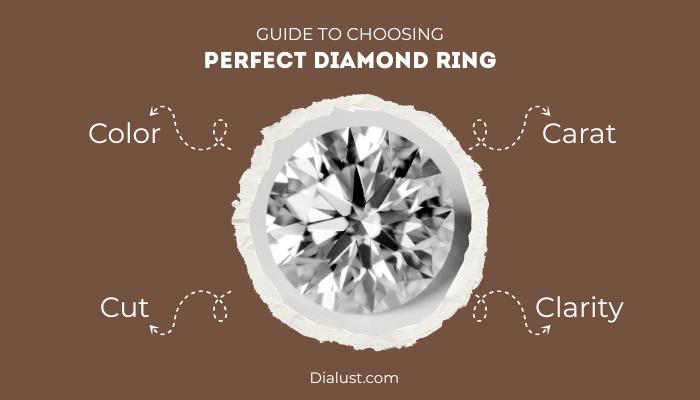
The 4Cs – Cut, Color, Clarity, and Carat are the essential factors that determine a diamond’s quality and value. These standards help you assess a diamond’s appearance, brilliance, and why prices can vary. Understanding these basics provides a solid foundation for choosing a diamond ring with confidence. By learning the 4Cs, you can make an informed decision that balances beauty and budget. For more detailed information on diamond grading, you can refer to the official GIA Diamond Grading Guide.
-
Cut: The diamond’s cut determines how well it reflects light and creates sparkle.
-
Color: Color measures how colorless a diamond is, graded from D (colorless) to Z (visible tint).
-
Clarity: Clarity describes how clean a diamond appears and the visibility of natural inclusions.
-
Carat: Carat weight indicates the diamond’s size and directly impacts its price.
Choose the Right Diamond Shape
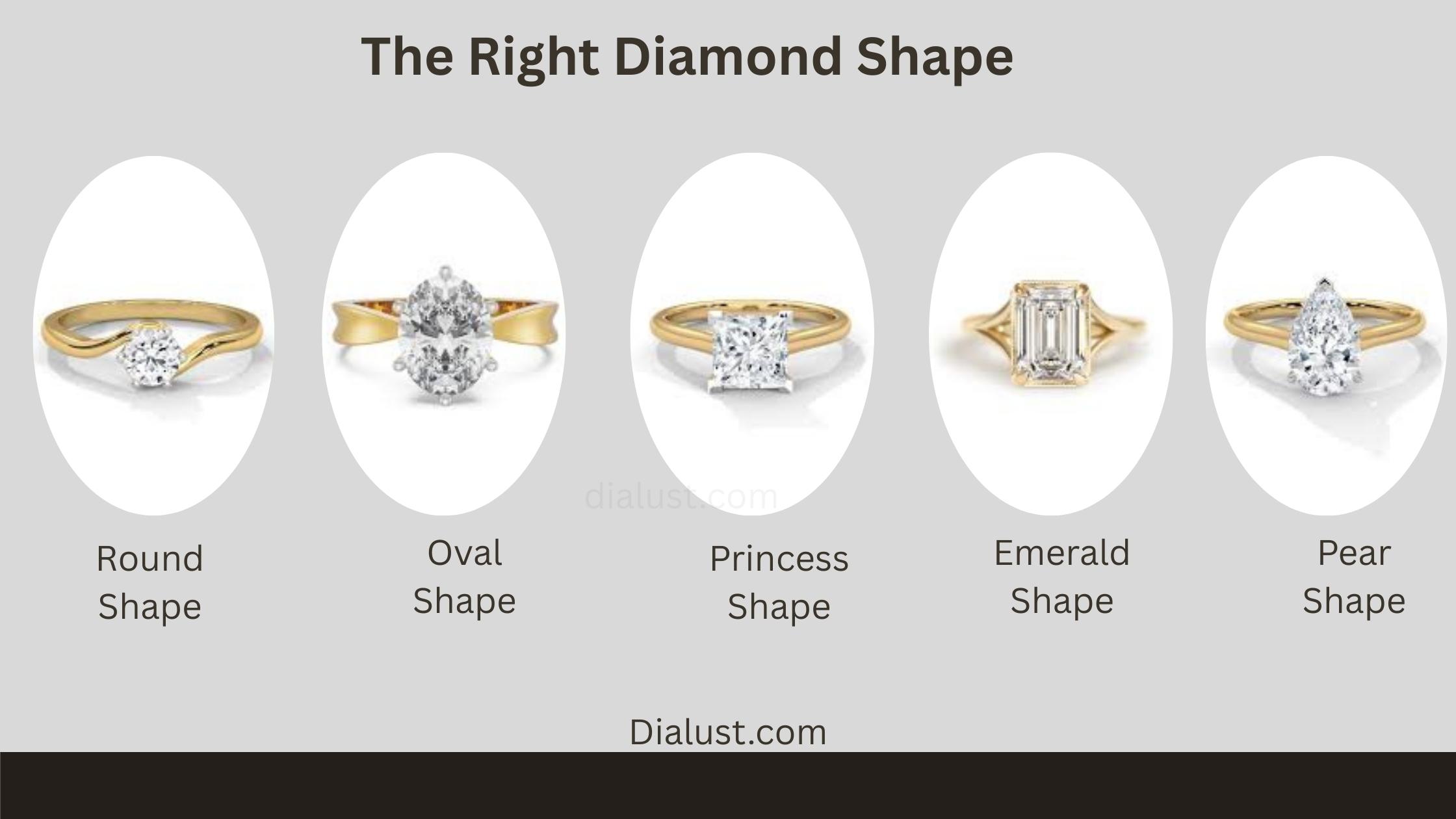
The shape of a diamond affects how it sparkles, how large it appears, and the overall style of the ring. Each shape has its own personality, price range, and visual impact.
-
Round: Offers the most sparkle and is the most popular choice, but usually costs more.
-
Oval: Appears larger than a round diamond of the same carat and gives excellent finger coverage.
-
Princess: A square shape with sharp corners, known for modern style and strong brilliance.
-
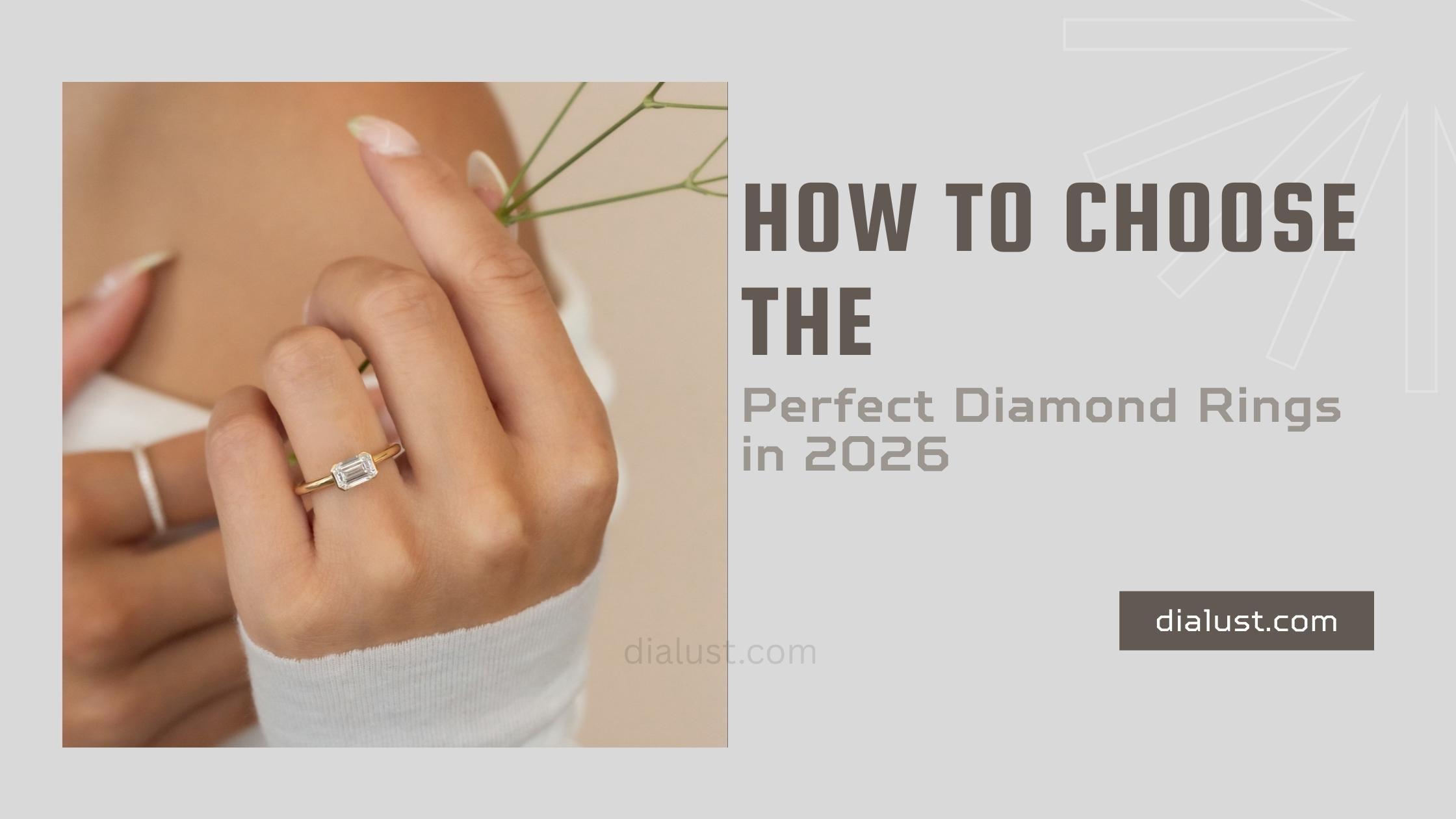
Emerald: Features clean lines and a mirror-like shine, perfect for an elegant and refined look.
-
Pear: A unique teardrop shape that elongates the finger and stands out beautifully.
Decide on the Ring Setting
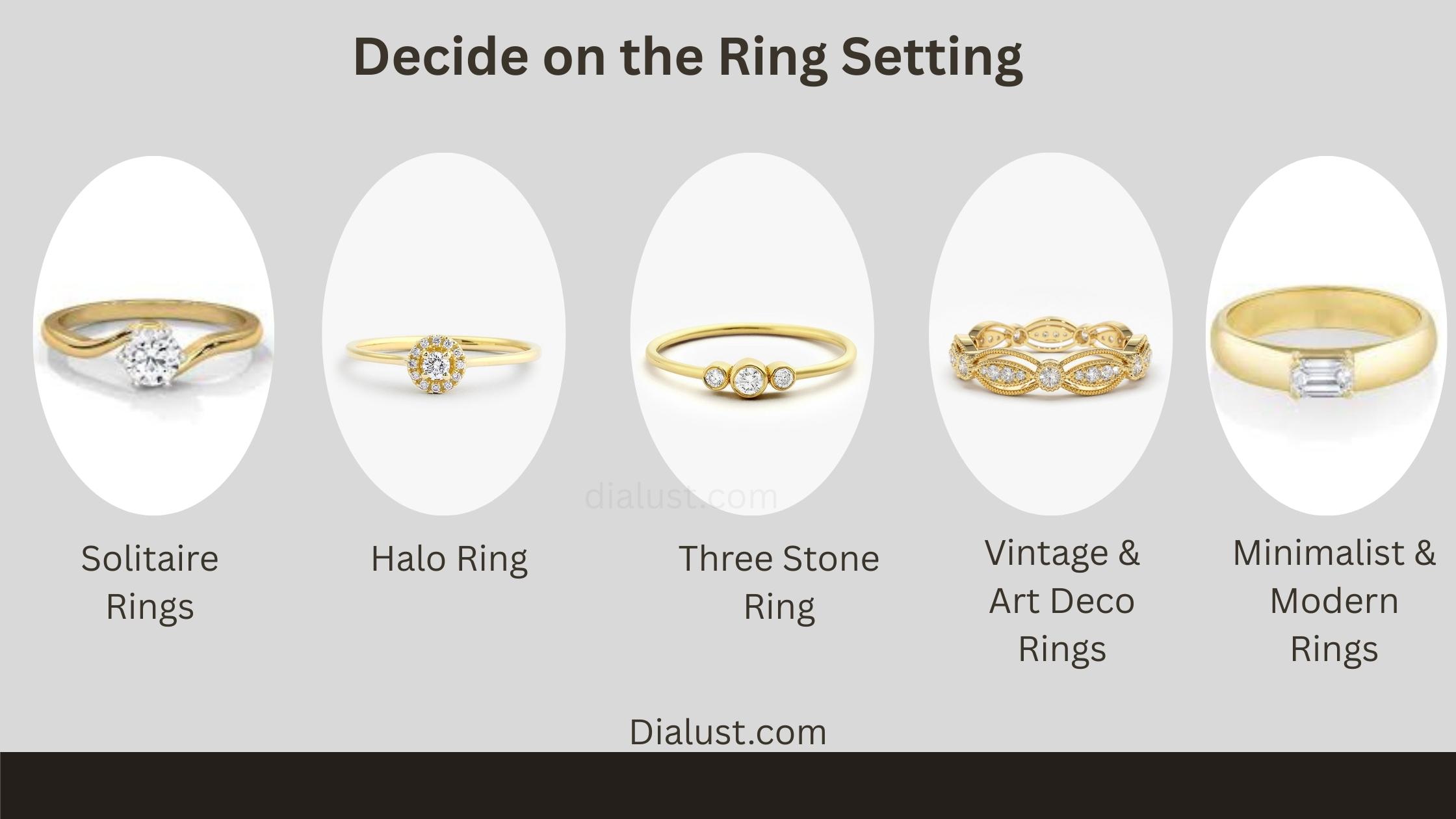
A ring setting is the design that holds the diamond securely in place and shapes the overall look of the ring. It plays a big role in how much the diamond sparkles and how the ring feels on the hand. Different settings can make the same diamond appear simple, bold, or more luxurious. Choosing the right setting depends on personal style, comfort, and lifestyle. Understanding the basics helps you select a design that truly reflects your taste.
-
Solitaire: A single diamond with a simple band, perfect for someone who loves timeless elegance and minimal design.
-
Halo: A center stone surrounded by small diamonds, ideal for those who want extra sparkle and a bigger-looking ring.
-
Three-Stone: Features three diamonds symbolizing past, present, and future, best for romantic and sentimental personalities.
-
Pavé: Small diamonds set along the band for continuous shine, great for someone who enjoys subtle glamour.
-
Vintage: Detailed and artistic designs with antique charm, suited for those who love unique and romantic styles.
Set a Realistic Budget
The smartest step for purchasing a diamond ring requires you to establish a precise budget. The traditional guideline requires you to spend two or three months of your salary for buying a diamond ring but this rule exists as a marketing strategy which does not benefit your financial health. You should select an expenditure level which allows you to maintain financial peace without incurring any stressful obligations.
Invest your money according to the cut quality of diamonds rather than their carat weight. A diamond which has a smaller size but an outstanding cut will produce better visual results than a larger diamond which has inferior proportions. People perceive diamonds through their sparkle and brilliance which has a greater effect than their physical size.
You need to consider additional costs which will be hidden from you. The total expenses for a diamond ring include its diamond price plus ring setting costs and certification report expenses and resizing fees and maintenance costs and insurance expenses. The extra costs require your planning because they protect you from unexpected expenses while enabling you to select your preferred ring within your budget.
Natural vs Lab-Grown Diamonds
Natural and lab-grown diamonds may look the same, but they differ in origin, price, and long-term value.
Understanding these differences helps you choose the option that best fits your budget, beliefs, and preferences.
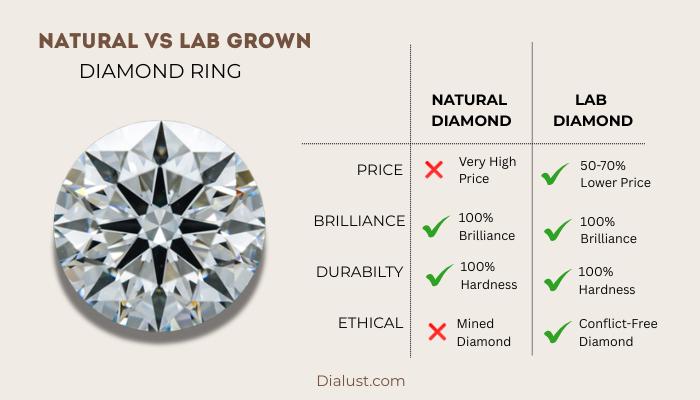
| Feature | Natural Diamonds | Lab-Grown Diamonds |
|---|---|---|
| Origin | Formed naturally inside the earth over billions of years | Created in a laboratory using advanced technology |
| Price | More expensive due to rarity | More affordable for the same size and quality |
| Appearance | Classic brilliance and natural formation | Visually identical with the same sparkle |
| Resale Value | Generally holds value better | Lower resale value in most cases |
| Ethical Impact | Ethical when responsibly sourced | Considered more eco-conscious with no mining required |
Common Mistakes to Avoid
-
Choosing Carat Over Cut:
Bigger doesn’t always mean better. A large diamond with poor cut quality can look dull, while a slightly smaller, well-cut stone will shine beautifully. -
Ignoring Lifestyle:
Your ring should match your daily routine. If you have an active lifestyle, a delicate or high setting may not be the most practical choice. -
Not Checking Certification:
Always ask for a proper grading report. Certification confirms the diamond’s quality and protects you from overpaying. -
Buying Without Comparing:
Making a quick decision can lead to regret. Comparing options helps you understand pricing, quality differences, and find the best value for your budget.
Final Checklist Before Purchase
Before making the final payment, take a moment to review the important details. A quick check can give you peace of mind and ensure you’re making the right decision.
✔ Diamond shape selected – Choose a shape that matches personal style and feels right on the hand.
✔ 4Cs reviewed – Confirm the cut, color, clarity, and carat meet your expectations and budget.
✔ Certified stone – Make sure the diamond comes with a trusted grading report.
✔ Budget finalized – Double-check that the total cost fits comfortably within your plan.
✔ Ring size confirmed – Verify the correct size to avoid resizing issues later.
✔ Return policy checked – Understand the return, exchange, and warranty terms before buying.
Taking a few extra minutes to review these points can help you purchase with confidence and zero regrets.
FAQs – Choosing the Perfect Diamond Ring
1. What’s the most important factor in a diamond?
The cut is the key — it determines how much the diamond sparkles.
2. Should I prioritize carat or cut?
Always prioritize cut over carat; a smaller well-cut diamond looks brighter than a larger poor-cut one.
3. Are lab-grown diamonds real?
Yes, they are chemically and visually identical to natural diamonds but usually cost less.
4. How do I know my diamond is authentic?
Always check for certification from a trusted gemological lab like GIA or IGI.
Conclusion
Selecting a perfect diamond ring requires more than choosing between the biggest diamond and the priciest diamond because the ring must reflect your love and personality and your daily living. the perfect diamond ring is more than a purchase; it is a statement of love, personality, and style. Your ring selection process requires three steps including understanding the 4Cs and examining various ring shapes and settings and developing an appropriate budget. Your diamond will become a valuable everlasting symbol through your acquisition of correct knowledge about it.